
How Tim Cakir Scaled AI Operator Using AI Agents Across Sales, Ops, and Finance Day to Day
In this “AI in Action” interview, Tim Cakir, CEO of AI Operator, shows you how AI agents support his business behind the scenes every day. You’ll learn how he uses AI to scale sales, operations, and finance—while keeping humans in control and building a leaner, smarter company.
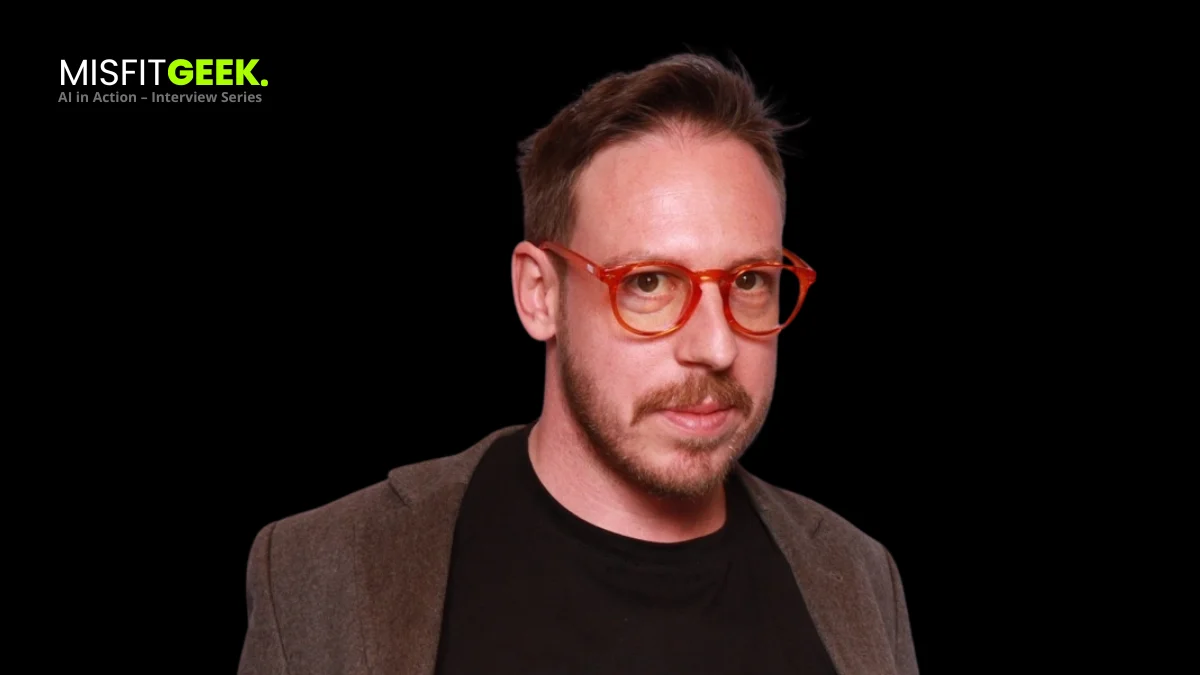
1. Briefly introduce yourself and your business.
I’m Tim Cakir, CEO and founder of AI Operator. We provide AI training, consulting, and automation, and empower teams to successfully adopt AI.
I was the CEO of a 110-person company, and I found our processes outdated and frustrating. When ChatGPT launched, I knew it would transform how we work.
Now my mission is teaching people to embrace AI, and get smarter with it.
About 10 years ago I was Head of Marketing at Restb.ai, a computer vision for real estate image recognition. When our CTO explained neural networks, deep learning, and machine learning to me, I was fascinated.
2. When did you first decide to use AI in your business, and what problem were you trying to solve at that time?
AI Operator has had AI integrated from day one, because everything we do is about helping others learn and work with AI effectively.
In fact, we avoid saying “use AI,” because it’s not just a tool. Instead we prefer to “work with AI,” which implies collaborating with an intelligent partner.
We push the boundaries of what we can accomplish with AI, testing the strengths and weaknesses. Then we train teams to do the same.
3. Which areas of your business use AI today?
All areas, but I’ll give sales, operations, and finances as examples.
Claude Code acts like 10 salespeople for us.
When someone fills out our inquiry form, AI checks their company, does deep research, qualifies them, and enters them into our pipeline.
Meeting transcripts go into Claude Code, which has our sales methodology, frameworks, and templates built in.
It understands what each lead is looking for, moves them through the pipeline, creates follow-ups, proposals and agreements, and updates our pipeline in markdown files on my computer. It also updates the Notion CRM, where a Notion agent ensures deals have the right information.
Basically, Claude Code and Notion AI work together to help us close more deals.
In operations, AI helps create training programs and learning resources from client surveys. Post-session materials and follow-ups are also generated much faster with AI.
As for finances, we use Mercury Banking, which has an MCP (Model Context Protocol) integration. I can ask Claude questions like “Where did we spend money last month?” or “Is there a new subscription?”
Monthly checks automatically alert me if anything changes, or if I should consider canceling any subscriptions. It tells me which tools I use most, so I can make better financial decisions.
4. What specific AI tools, platforms, or workflows have had the biggest impact on your growth or efficiency so far?
Initially, we invested in ChatGPT’s Pro and Business plans. Custom GPTs and projects helped us immensely.
However, Claude Code is the most impactful AI tool we’ve used. It’s taken over my life in the past few months. I’ve replaced my ChatGPT Pro plan with the Claude Max plan, and we’ll migrate the team to Claude as well.
Notion is another high-impact tool. We’re building a massive knowledge library in Notion so I can just come into Notion AI and ask any question, and it will have an answer.
5. Can you share one concrete example where AI directly improved results?
Here’s a perfect example: My Claude Code agent pitches guest posts to relevant publications, and that’s how I secured this interview with MisfitGeek.
Right now, I’m dictating my answers to Notion AI. Then, Claude will clean up the transcript, and our content writer will review and polish.
The insights are all mine, AI just helps increase my reach and refine my output.
The result? I’ve been featured in lots of interviews and podcasts, increasing our reach.
Another example is SEO. We didn’t realize our SEO was doing badly until Claude Code performed an SEO analysis on our website.
It gave us about 50 tasks to improve our SEO. About 30% AI could do itself, and our AI Operations Lead handled the rest. Our SEO has improved, and we have more leads coming through our website.
6. How did you integrate AI into existing processes without disrupting your team or customers?
We’ve been an AI company from the beginning, and we’re constantly learning new things to stay at the cutting edge of what’s possible. We encourage our team members to innovate by building automations and agents, and our team members have all been through the same training we run for clients.
7. What mistakes or missteps did you make early on while adopting AI?
Last month, one of our team members almost sent an AI-created proposal which had the wrong dates.
This was a lesson for all of us: nothing goes out without a thorough human check. If you let AI do everything for you, then you will be replaced. But we’ll always need a human in the loop.
AI can’t take responsibility, humans are always responsible for the output.
Fact-checking is vital. We have a fact checker, but we still double or triple check. We want to make mistakes quickly and learn from them. I always say: make mistakes, but don’t make the same mistake twice.
8. How do you balance human judgment with AI-driven insights in your business decisions?
We never trust AI completely. AI doesn’t make decisions, but it brings the data together so you can make better decisions.
We have AI involved in everything, so we’ll ask questions like “What should our goals be for next quarter?” But that doesn’t mean we’ll go with what it suggests. AI makes us think deeper, but doesn’t decide for us.
Often, we don’t need AI to tell us the answer. We need it to help us think more deeply, ask better questions, or look at things from different perspectives.
9. What internal skills or mindset shifts were required for your team to adopt AI successfully?
An important mindset shift was to make sure team members know they are responsible for all their work, regardless of how AI was involved in the process. You can’t blame AI for your mistakes.
But, as my team members are quite junior, they’ve adapted quickly. For example, our video editor recently surprised me by building a highly useful brand compliance checker Notion agent. This agent automatically checks every piece of content, flagging anything that clashes with our brand guidelines.
We’ve had to shift our mindsets away from AI-First, which implies people come second. We’ve also learned not to compare humans with AI or measure “human vs AI” because it’s not a competition, we should work together.
In our Human AI Manifesto at humanaimanifesto.org, we state that the future is human + AI.
I’ll always do my best to support humans and create love, not fear, about AI.
10. How do you measure whether AI is actually delivering value to your business?
I don’t judge AI. I look at the result of the person who’s working with AI.
If everyone can be 10x more efficient working with AI, that’s awesome.
I invite every business in the world to think like this. Yes, we’re going to see some autonomous businesses, but even autonomous businesses will be created by someone.
We shouldn’t put too much emphasis on AI performance. Instead, measure what humans achieve with AI.
11. Has using AI changed how you think about scaling your business long-term?
Absolutely. Before, if I was struggling with sales, lead research, admin, CRM clean-out, I would have hired an SDR or an executive assistant.
However, now I’ve built all of these systems in Claude Code and Notion AI that tackle the majority of my admin.
I’m working on turning these systems into an AI team member with an email address, a computer, Slack access, email, and Notion access.
It’s still early days—at the time of writing, I’m experimenting with different tools to achieve this.
But the shift is clear. I’ve managed hundreds of team members before, in stressful environments. Now, I want a small team of top players. Each one will be empowered with AI, doing 10x what they could normally do, and managing their own AI systems.
12. What AI use case do you believe is most underestimated by business owners today?
Sometimes, the simple things are underestimated.
AI daily briefings have changed my life. Claude gathers context from my email, calendar, Notion, etc. and compiles it in a helpful brief, so I know what my focus will be tomorrow.
Having a single, reliable source of truth is also underestimated. Centralizing your whole business context in one platform means any process or systems you build will have all the context about your business.
This is where Notion shines. Maybe they saw where things were heading with AI, because having your entire business on one platform, with AI and agents layered in, is magic.
13. What advice would you give to founders or CEOs who want to use AI but feel overwhelmed or unsure where to start?
First, learn to work or collaborate with AI instead of just “using” it.
Secondly, ask yourself: What sucks in your business?
“It sucks that we have to report to our investors every Friday.”
If it takes five hours, try bringing it down to 30 minutes. Maybe AI gathers and compiles the data, and you review it.
Delegate anything that’s repetitive or boring to AI.
With this mindset, you’ll find millions of ways to increase efficiency in your business.
Finally, decide you’re going to do with all the time you save.
It could be client calls, thinking, building, higher cognitive work. Lower cognitive work should decrease.
14. Looking ahead, how do you see AI shaping your business over the next 12–24 months?
The “AI employee” is the biggest thing we’re going to see in the next 6 months.
We’re working towards systems that improve through looping. We got excited about Clawdbot (now Maltbot) and tools like Ralph (a looping mechanism for Claude Code to keep doing the same feature over and over, improving each time).
So far, I’m still babysitting most of the systems—I need to launch them and look at them. But imagine the day when we don’t need to do that. Maybe by the time this gets published, we might be there, because things move so fast.
I’ve already started building something called the BOL (Business Operations Loop). It loops through the business operations, SOPs, and processes, it learns what is done well and what’s done badly. It keeps improving and updating itself, optimizing its own system.
Imagine if we could do the 20% of things that bring 80% of the growth, and AI could handle the other 80%?
I’m working towards that.
15. Which AI tools would you recommend to other business owners, and why would you recommend each one?
My top recommended tools right now:
- Claude Cowork — It’s Claude Code wrapped in a UI, easier to use but still powerful. Teach your teams how to use it, let them make mistakes now while the AI is still early. Or come to us—we’re obsessed with making sure people get the best out of these tools or work best with them.
- Notion — We love Notion. It’s our all-in-one knowledge base, project and tasks manager, content calendar, and more, with AI and agents built in.
- Google Workspace — Google will be great for businesses, especially in the coming year. Gemini is excellent and definitely a winner for businesses already invested in the Google ecosystem.
- Granola — My personal favorite meeting notes tool.
- Aqua Voice — The future will be speaking, not typing. I do it all the time, just dictate to AI tools rather than typing. Not only is it faster, but it feels much more natural. Things flow much better, your brain fires at higher speed.
- Jace AI — I switched to Jace from my previous favorite email tool, Superhuman. It helps me do my emailing at 10x the speed.
If I was to narrow it down to just two? Claude and Notion. Done.
👉 Inspired by Tim Cakir’s approach to scaling AI Operator by working with AI instead of fearing it?
Share this interview with a founder or CEO who’s figuring out how AI fits into their business. It might be the clarity they need to build smarter systems—and a calmer way to scale.
At MISFITGEEK, our AI in Action Interview Series highlights builders who are using AI in practical, human-first ways. Have a real AI story of your own? Reach out through our Contact page—your journey could help others navigate what’s next.